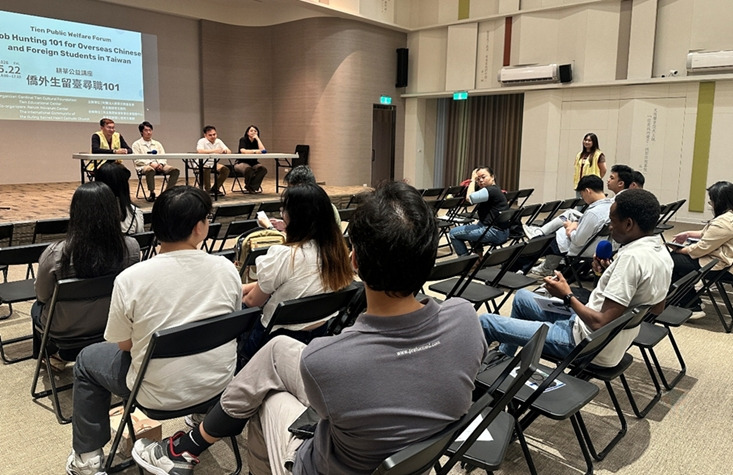
2026年5月22日,耕莘文教基金會與新事社會服務中心於耕莘文教院大禮堂攜手舉辦「僑外生留臺尋職101」公益講座,邀請多位長期關注外國人才、僑外生留臺政策與勞動權益的講者,分享目前在台僑外生畢業後求職與留台制度、居留規範以及未來職涯發展方向。
On May 22, 2026, the Cardinal Tien Cultural Foundation and Rerum Novarum Social Service Center jointly held the public welfare seminar “International Students Staying and Working in Taiwan 101” at the auditorium of the Cardinal Tien Cultural Foundation. The event invited several speakers who have long been concerned with foreign talent, policies for international students staying in Taiwan, and labor rights issues. They shared insights on Taiwan’s current job-seeking system for international students after graduation, residency regulations, and future career development opportunities.
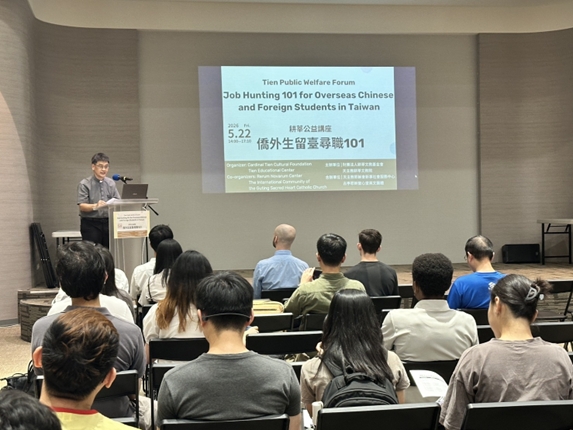
▲徐森義董事長開場致詞暨介紹講員(Opening remarks and speaker introductions by Chairman Matthew(Sen-Yi)Hsu, S.J.)
從評點制度開始:認識第一張工作證
Starting with the Point-Based System: Understanding Your First Work Permit
首先由社團法人勞動與發展協會副研究員進行分享,以「如何拿到第一張台灣工作證」為主題,介紹目前僑外生畢業後最重要的「評點配額制」。
The seminar first featured a sharing session by an Associate Research Fellow from the Labor and Development Association under the theme “How to Obtain Your First Work Permit in Taiwan,” introducing the important “Points-Based Evaluation System” currently used for international students seeking employment after graduation
講者提到,現在僑外生申請工作許可,不再只以薪資作為唯一標準,而是透過多元評分方式進行審核,包含學歷、語言能力、工作經驗、專業能力與國際背景等項目。對於具備跨文化背景與多語能力的在台僑外生而言,這些特質其實也是重要優勢。
The speaker explained that work permit applications for international students are no longer evaluated solely based on salary requirements. Instead, applications are reviewed through a diversified points system that considers factors such as educational background, language proficiency, work experience, professional skills, and international background. For many international students with cross-cultural experiences and multilingual abilities, these qualities can become significant advantages in Taiwan’s job market.
此外,講者也提醒學生,在求職時除了準備履歷與提升能力外,也應注意企業是否具備合法聘僱外國人的資格,避免因資訊不足而影響自身權益。
In addition, the speaker reminded students that, besides preparing resumes and strengthening their professional abilities, they should also pay attention to whether a company is legally qualified to hire foreign workers. This can help students avoid potential issues caused by insufficient information and better protect their own rights and interests.
從 ARC 到 APRC:畢業後的居留規劃
From ARC to APRC: Planning Residency Pathways After Graduation
第二場由內政部移民署臺北市服務站專員分享「從 ARC 到 APRC」,介紹僑外生在畢業後的合法居留與長期規劃。
The second session was presented by a specialist from the National Immigration Agency Taipei City Service Center under the theme “From ARC to APRC,” introducing legal residency pathways and long-term planning for international students after graduation.
講者詳細說明,學生在畢業後可申請「寻職居留」,作為畢業到正式工作的過渡期間,讓學生能夠有更多時間在台灣尋找適合的工作機會。
The speaker explained in detail that graduates may apply for a “job-seeking residency permit” after completing their studies, which serves as a transition period between graduation and formal employment. This allows international students more time to search for suitable job opportunities while remaining legally in Taiwan.
同時,也提醒學生需特別注意居留期限與工作許可規範,避免因為不了解制度,而產生逾期或違法工作的情況。許多學生透過講座也更加理解,從學生身份轉換成工作居留的過程,其實需要提前規劃與準備。
At the same time, the speaker reminded students to pay close attention to residency expiration dates and work permit regulations in order to avoid overstaying or working illegally due to a lack of understanding of the system. Through the seminar, many students also gained a clearer understanding that the transition from student status to work residency requires early preparation and careful planning.
另外,講者也介紹了永久居留 APRC 的相關資訊,讓參與者能夠對於未來長期留臺發展有更完整的認識。
In addition, the speaker introduced information related to permanent residency (APRC), helping participants develop a more comprehensive understanding of long-term opportunities for living and developing their careers in Taiwan.
國際人才政策與就業金卡介紹
Introduction to International Talent Policies and the Taiwan Employment Gold Card
國際人才延攬及服務中心的客戶關係專員分享目前台灣的國際人才政策,以及「就業金卡」與 Talent Taiwan 的相關服務。講者提到,台灣近年積極推動國際人才政策,希望吸引更多專業人才留在台灣發展,因此也逐步放寬部分制度與資源。
Finally, a Client Relations Specialist from the Taiwan Employment Gold Card Office introduced Taiwan’s current international talent policies, as well as services related to the Employment Gold Card and Talent Taiwan. The speaker mentioned that Taiwan has been actively promoting international talent policies in recent years in hopes of attracting more global professionals to stay and develop their careers in Taiwan. As a result, certain regulations and support resources have gradually become more flexible and accessible.
其中,「就業金卡」結合工作許可、居留證與簽證功能,具有較高的彈性,持卡人能夠自由轉換工作,對於未來有意長期留臺發展的外國人才而言,是相當重要的制度之一。
Among these initiatives, the Employment Gold Card combines the functions of a work permit, residency permit, and visa into a single document, offering a high degree of flexibility. Holders are able to change jobs freely, making it one of the most important systems for foreign professionals who intend to pursue long-term career development in Taiwan.
此外,Talent Taiwan 也提供求職媒合、生活資訊與留臺諮詢等服務,希望透過更多陪伴與資源支持,協助國際人才適應在台生活與工作。
In addition, Talent Taiwan provides services such as job matching, daily living information, and residency consultation. Through continued support and accessible resources, the program aims to help international talents better adapt to living and working in Taiwan.
在制度與陪伴之間,看見留臺的可能性
Between Policies and Support: Discovering the Possibilities of Staying in Taiwan
本次講座除了提供實務制度資訊外,也讓許多僑外生重新思考自己與台灣的連結。
Beyond providing practical information about residency and employment systems, this seminar also encouraged many international students to rethink their connection with Taiwan and their future possibilities here.
新事社會服務中心周煐傑專員首先說明國際學生常見的五大挑戰,包括文化適應落差、心理壓力與孤立感、工讀與就業困境、簽證與居留相關法規,以及社會支持不足等議題。講者透過實際案例與互動方式,分享國際學生在台可能遇到的生活情境,讓學生更容易理解如何面對問題與尋求協助。同時,也鼓勵學生建立互助與支持網絡,提升在台生活的安全感與歸屬感。
Rerum Novarum Center specialist Rick Chow first explained the major challenges commonly faced by international students, including cultural adjustment difficulties, psychological stress and feelings of isolation, part-time work and employment challenges, visa and residency regulations, and the lack of social support systems. Through real-life examples and interactive discussions, the speaker shared practical situations that international students may encounter while living in Taiwan, helping participants better understand how to address these challenges and seek appropriate assistance. The session also encouraged students to build mutual support networks and strengthen connections with others, fostering a greater sense of security and belonging during their time in Taiwan.
周專員進一步介紹本中心推動之「國際學生學習與生活支持方案」,服務內容包含個案管理、情緒支持、生活協助、法律與資源轉介、團體活動及社群支持等,希望協助國際學生更順利地適應在台生活與未來發展。本中心期待透過跨領域合作與持續陪伴,建立更友善、多元且具包容性的支持環境。
Mr Chow further introduced the “International Student Learning and Living Support Program” promoted by the Center. The program provides a wide range of services, including case management, emotional support, daily living assistance, legal and resource referrals, group activities, and community support. Through these services, the Center aims to help international students adapt more smoothly to life in Taiwan and support their future development.The Center looks forward to fostering a more welcoming, diverse, and inclusive support environment through cross-sector collaboration and continuous companionship.
對許多離鄉求學的學生而言,畢業後的方向常伴隨著不安與迷惘,而透過這類型的公益講座,不只是資訊的傳遞,更是一種陪伴與支持。讓學生知道,在求學與尋職的過程中,仍然有許多單位與資源願意提供協助。
For many students studying far from home, the period after graduation is often filled with uncertainty and confusion. Through public welfare seminars like this, what is offered is not only information, but also a sense of companionship and support. These events help students understand that throughout their studies and job-seeking journey, there are still many organizations and resources willing to provide assistance and guidance.
而我們新事社會服務中心一直以來長期關注移工、新住民、國際學生與跨文化族群的需求,除了提供講座,交流互動與資源鏈接,也會提供社會支持和個案的諮詢,協助僑外生更快融入台灣的大家庭。
For a long time, Rerum Novarum Center has continued to focus on the needs of migrant workers, new immigrants, international students, and multicultural communities. In addition to organizing seminars,conversation activities, and resource connections, the center also provides social support and individual consultation services, helping international students integrate more smoothly into Taiwanese society and feel a stronger sense of belonging in Taiwan’s larger community.
透過本次公益講座,新事社會服務中心希望讓更多國際學生感受到「在台灣並不孤單」,也期望促進校園與社會對國際學生需求之理解與重視。未來,本中心將持續推動相關支持服務與教育倡議,陪伴更多國際學生安心學習、穩定生活,並在台灣找到屬於自己的方向與歸屬感。
Through this public welfare lecture, Rerum Novarum Center hopes to help more international students feel that they are not alone in Taiwan. The Center also aims to promote greater understanding and awareness of international students’ needs within both educational institutions and the wider community. Moving forward, Rerum Novarum Center will continue to develop support services and educational initiatives that empower international students to study with confidence, adapt to life more smoothly, and find their own sense of direction, belonging, and opportunity in Taiwan.
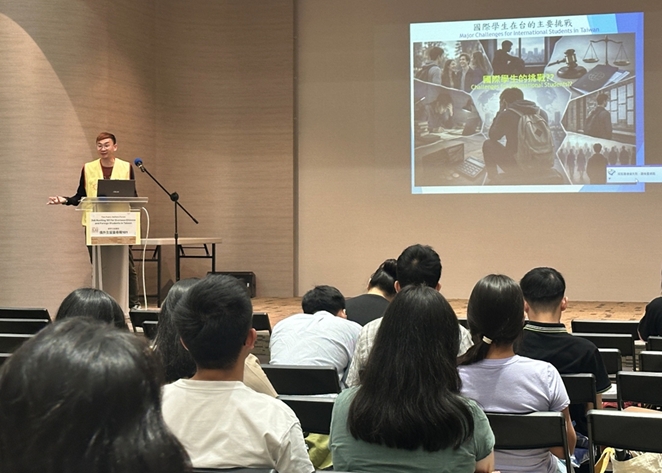
▲新事周煐傑專員 分享留學生留台會遇到的困難(Mr Chow Sharing the difficulties of studying in Taiwan)
從居留到就業,理解留臺生活的現實與可能
From Residency to Employment: Understanding the Realities and Possibilities of Life in Taiwan
除了各資源單位介紹可運用的協助資源外,現場也邀請三位學長姐分享自己的留臺經驗,從生活適應、制度申請到求職準備,提供國際學生更貼近實際需求的小提醒。
In addition to introducing the support resources available through various resource organizations, the lecture also invited three senior students to share their personal experiences of staying in Taiwan. Drawing on topics such as daily life adaptation, administrative procedures, and job preparation, they offered international students practical tips that closely addressed their real-life needs.
首位來自古亭耶穌聖心堂 AMDG 聖詠團及Euphony Singers 的印尼籍指揮Cherly,以自身從事音樂創作、演出及自由接案的經驗為例,分享外國人在台工作時,不只需要專業能力,更需要了解台灣的工作制度、居留規定與相關法律。
The first speaker, Cherly from Indonesia, is the conductor of the AMDG Choir of the Guting Sacred Heart Church and Euphony Singers, drawing from her own experiences in music composition, performance, and freelance projects, the speaker shared valuable insights into the realities of working as a foreign professional in Taiwan. She emphasized that, in addition to professional skills and expertise, it is equally important to understand Taiwan’s employment system, residency regulations, and relevant legal requirements in order to build a stable and sustainable career.
講者提到,自己在申請工作許可與居留文件時,曾遇到資訊不一致、流程複雜、補件等待時間長等問題,也深刻感受到語言與制度差異所帶來的壓力。此外,講者也提醒國際學生與外國工作者,即使是街頭表演、自由接案等形式,也可能涉及工作許可申請,若不了解相關法規,可能會產生法律風險。
The speaker noted that during the process of applying for work permits and residency documents, she encountered challenges such as inconsistent information, complicated administrative procedures, and long waiting periods for additional document reviews. These experiences highlighted the stress that can arise from language barriers and differences in legal and administrative systems. She also reminded international students and foreign professionals that even activities such as street performances and freelance work may require proper work authorization. Without a clear understanding of the relevant regulations, individuals may unknowingly expose themselves to legal risks and complications.
透過分享 ARC、報稅、地址變更與工作證更新等實際經驗,講者鼓勵大家遇到問題時應主動向政府單位詢問,並善用翻譯與陪同資源。此次經驗談不只是制度資訊分享,更讓在場學生了解到,國際學生在台生活需要更多理解、支持與陪伴,也凸顯社會支持資源的重要性。
By sharing her firsthand experiences with ARC applications and renewals, tax filing procedures, address registration updates, and work permit renewals, the speaker encouraged participants to take the initiative to seek assistance from government agencies whenever they encounter difficulties. She also emphasized the importance of making use of translation services and support companions when navigating unfamiliar administrative processes. More than simply providing information about regulations and procedures, her presentation helped students understand the challenges that international students may face while living in Taiwan and highlighted the importance of empathy, social support, and accessible resources in helping them successfully adapt to their new environment.
第二位菲律賓籍講者Miko目前是一名商業分析師,他在分享中談到自己留在台灣工作的心路歷程,以及從學生身份轉換為職場工作者時所面對的挑戰。尤其在疫情期間,許多僑外生都面臨求職困難、資訊不足及身份轉換等問題。講者認為,國際學生進入台灣職場時,需要時間適應不同文化與工作環境,因此建立人際關係與參與社群活動非常重要。許多工作機會往往來自朋友、同學與人脈之間的介紹與分享。
The second speaker, Miko from the Phillipines, currently works as a business analyst. He shared his personal journey of choosing to stay and work in Taiwan, as well as the challenges he faced while transitioning from being an international student to a full-time professional. Particularly during the COVID-19 pandemic, many international students faced challenges related to job searching, limited access to information, and the transition from student status to professional employment. The speaker noted that adapting to Taiwan’s workplace culture and professional environment often takes time, making it essential for international students to actively build relationships and participate in community activities. He emphasized that many career opportunities arise through personal connections, recommendations, and information shared among friends, classmates, and professional networks. Therefore, developing a strong social network can play a crucial role in both career development and successful integration into Taiwanese society.
此外,講者也鼓勵學生不要因短時間內找不到工作而失去信心,每個人的步調與適應速度不同,只要持續累積經驗並保持行動,就有機會找到適合自己的方向。透過這次真實經驗分享,也讓在場學生更加理解,留在台灣發展雖然不容易,但並不是孤單一人,身邊會有許多前輩與朋友願意互相支持與陪伴。
The speaker also encouraged students not to lose confidence if they are unable to secure a job immediately after graduation. He emphasized that everyone progresses at their own pace, and the process of adapting to a new environment varies from person to person. By continuing to gain experience, develop skills, and remain proactive, international students can gradually discover career paths that align with their goals and strengths. Through sharing his authentic experiences, the speaker helped participants better understand that while building a future in Taiwan can be challenging, they do not have to face these challenges alone. There are many alumni, professionals, and peers who are willing to offer guidance, support, and companionship along the way.
第三位講者則是來自臺積電有限公司的印尼籍首席研發工程師Owen,講者於分享中以自身留台求職與工作經驗,說明提早準備與了解職場的重要性。講者提到,許多國際學生在求職時,容易擔心自己的科系背景與工作內容不完全相關,但企業除了專業能力之外,也十分重視學生的學習能力、工作態度與國際視野。因此,只要符合基本條件並具備積極態度,即使研究領域不同,仍有機會進入理想企業發展。
The third speaker, Owen from Indonesia, currently serves as a Principal Research and Development Engineer in TSMC. He emphasized the importance of early preparation and gaining a clear understanding of the workplace, based on his own experience of seeking employment and building a career in Taiwan. Through this lens, he observed that many international students worry about their academic background not perfectly aligning with the positions they are applying for. However, employers often value more than just technical expertise. In addition to professional knowledge and skills, companies place significant importance on an individual's ability to learn, professional attitude, adaptability, and global perspective. Therefore, as long as students meet the basic qualifications and demonstrate a positive and proactive mindset, they can still pursue opportunities at their desired organizations, even if their field of study does not directly match the job role.
講者也特別提醒學生,應提早開始規劃求職,而不是等到畢業後才開始投履歷。講者分享自己在畢業前一年便開始尋找工作與面試,雖然過程中經歷不少挫折與等待,但也因為提前準備,讓自己能在畢業後順利銜接職場。
The speaker also emphasized the importance of starting career planning early rather than waiting until after graduation to begin the job search process. He shared that he began exploring career opportunities and attending job interviews approximately one year before graduation. Although the process involved numerous challenges, setbacks, and periods of uncertainty, his early preparation ultimately enabled him to make a smooth transition from student life to full-time employment. Through this experience, he encouraged students to proactively explore career options, gain relevant experience, and prepare for future opportunities well in advance.
此外,講者也介紹台灣企業常見的薪資與福利制度,提醒學生評估工作時,不應只看每月薪資,也需整體了解公司的獎金制度、福利與未來發展性。最後,講者鼓勵學生不要限制自己的可能性,只要願意持續學習與累積經驗,未來仍有許多成長與發展機會。
The speaker also introduced common salary structures and employee benefits offered by Taiwanese companies. He reminded students that when evaluating a job opportunity, they should not focus solely on the monthly salary. Instead, they should take a comprehensive view of the company's compensation package, including bonus systems, employee benefits, career advancement opportunities, and long-term development prospects. In closing, the speaker encouraged students not to limit their own potential. He emphasized that as long as they remain committed to continuous learning, personal growth, and the accumulation of experience, there will always be opportunities for professional development and future success.
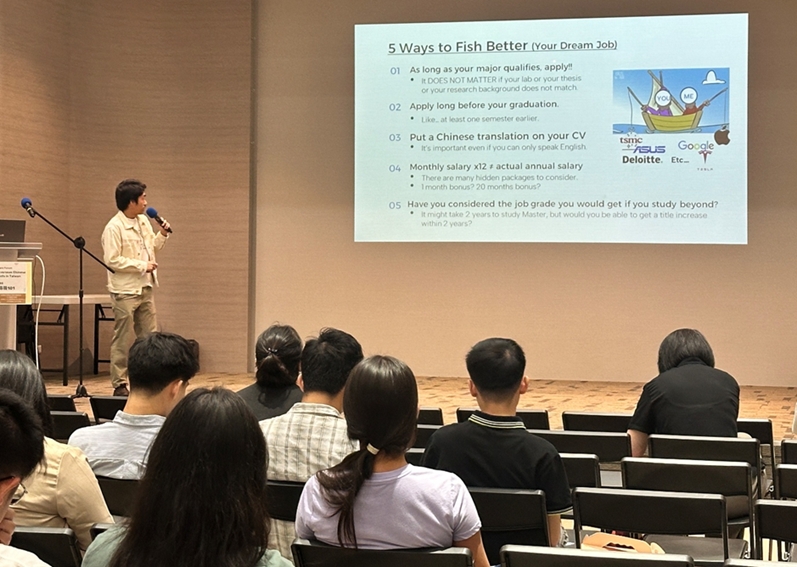
▲學長分享求職的5個小秘訣(Principal Research and Development Engineer shared 5 tips for job hunting.)
三位學長姐分享結束後,現場接續進行 Q&A 交流。學生們針對畢業後留臺工作、工作證申請、求職準備及職涯規劃等議題提出問題,講者也根據自身經驗給予回應與建議,讓交流內容更貼近國際學生實際面臨的需求。
After the three senior students and alumni finished sharing their experiences, the event continued with a Q&A session. Students raised questions on topics such as staying and working in Taiwan after graduation, applying for work permits, preparing for job applications, and planning their future careers. The speakers responded with advice based on their own experiences, making the discussion more closely connected to the real needs and concerns of international students.
Q:對於即將畢業的僑外生來說,如果想留在臺灣工作,最重要的準備是什麼?
Q: For international students who are about to graduate and wish to stay and work in Taiwan, what is the most important preparation they should make?
A:分享五項求職建議,包括
5 Ways to Fish Better(Your Dream Job)
1:勇敢投遞符合資格的職缺(Be confident and apply for positions that match your qualifications.)
2:提早開始求職準備(Tart preparing for your job search early.)
可以提早一個學期準備哦!You can begin preparing as early as one semester before graduation!
3:準備中文版履歷(Prepare a Chinese-language resume.)
即便你只會講英文,但是擁有中文簡歷可以方便別人檢閲 Even if you only speak English, having a Chinese-language resume can make it easier for employers and recruiters to review your qualifications.
4:了解完整薪資福利制度 (Understand the full compensation and benefits package.)
年薪不代表你的收入,還可以有加薪或者年終獎。Your annual salary does not necessarily reflect your total income, as additional compensation may include salary increases, performance bonuses, and year-end bonuses.
5:以及評估進修對職涯發展的幫助(Consider how further education can support your career development.)
尋求學校資源,非營組織幫助也是很好的選擇Making use of university resources and seeking support from non-profit organizations can also be valuable options.
新事社會服務中心是一個致力於關懷職場弱勢者的社會服務機構,戮力促進資源分享的共好社會,幫助社會上受到剝削、不公正對待的弱小族群,邀請您一起成為他們的守護者,您的捐款將幫助這些無能為力的人走出困境、獲得權益援助,請按下「我要捐款」或電洽(02)2397-1933 #122 ,感謝您的響應與關注!
觀看更多文章:
職災服務:https://www.new-thing.org/news/injury
原住民服務:https://www.new-thing.org/news/aboriginal
漁工服務:https://www.new-thing.org/news/migrant-fisherman
移工服務:https://www.new-thing.org/news/immigrate